


After 34 Years of HID, the Future Is LED
Now is the perfect time to plan, request quotes, and allocate budgets to avoid unexpected surprises in your next yard period. With ballast systems discontinued and only Osram lamps available, offering a different colour temperature than the original Philips lamps, transitioning to LED is both a practical and future-proof solution. Upgrades can be completed with the yacht in the water using the existing weld-ins or through-hull fittings, provided they are in good condition. For those not yet ready to transition, they continue to supply all manufactured HID components, including projectors, glass, O-rings, and gaskets, allowing you to maintain your current system until an upgrade becomes essential. With their in-house machine shop stocked with 2000kg of 3.2 Lloyd’s certified material, delivery times are never an issue. Machining, production, and assembly are all carried out under strict QC, ensuring excellence. The team also retrofit all competitor underwater lights including the discontinued AquaSignal and DeepSea.

Over 30+ years refining our underwater lights
As the business had grown over the years it was realised that a new machining, testing and assembly plant would be required to keep up with the growing demand for their products. The team at Underwater Lights use Auto-cad and have also been fully trained in the use of Rhino, the latest 3D module used by designers and naval architects working on new projects. This enables the design for a new lights placement to be inserted directly onto Rhino to reveal the beam pattern
of the light.
This year has also seen the launch of the new EXD underwater light and the implementation of ISO9001 that guarantees clients the best of quality and service. The purchase of a fourth Mazak CNC turning machine also means they can keep up with the increasing demand for retro fit units with almost immediate supply.
The story of Underwater Lights began back in 1991 when founder and M.D. Peter Urquhart designed the Original underwater light. His experience as a Chief Marine Engineer (1966-1976) drove him to gain his 1st. Class Steam and Motor Certificate, giving him in-depth knowledge of ship building materials, naval architecture, thermo-dynamics and electrical engineering. Later he became a Lloyds Registered surveyor, which gave him the insight and understanding of Rules and Regulations for ships and special craft. All very useful for the design and installation procedures for
his lights.
The very first underwater light was called the BULLEYT and used a 150 watt metal halide lamp. Over time minor changes were made to improve thermal and light output efficiency and in 2005 a 250 watt metal halide lamp in the BULLEYT was tested and it was found that the extra power and lumen output (19,000) did not work and deteriorated the overall efficiency. Basically, the diameter of the glass lens (62.5mm) was too small and too much heat was being generated.
This led to an increase in lens diameter to 75mm and the insert diameter from 100mm to 120mm. These increases in size had to be made to the screwed version installed in composite hulls. These lights were known as the ULTiMATE range. The company began using LED’s and 2010 saw the launch of the QTLED range and retro fitting
the old bulb system to LED began. The key to developing new products is to ensure that the older generation of BULLEYT and ULTiMATE can be upgraded with ease. The aim is to always keep the same threads and internal sizes to allow clients to upgrade their units without hauling the boat.
32 years on and Underwater Lights Ltd. developed the QTS range which is arguably the most versatile and complete underwater light ever made for the marine industry. Designed in the simplest format possible the lights now accommodate a variety of light power outputs, colour options and input powers making them suitable for any boat from 20m up to the largest superyachts.
The through hull QTS-100 & QT-80-Ti is uniquely made from Titanium and can be used directly on metal hulls, subject to surveyor approval, as well as carbon fibre and composite/fiberglass hulls saving yards and installers hours, if not days, on installation and potential warranty concerns through galvanic corrosion.
The QTS-75 weldin/cofferdam is machined from 316L stainless steel or 5083 aluminium which is Lloyds 3.2 certificated. Fitted with a toughened flat lens the LED beam angle is 100 degrees , perfect for running down the side of a yacht as well as along the stern. Available in low and high powers up to 25,000 lumens in blue, white and RGB+W. This light also includes an internal ball adjustment for the LED which allows a universal 20 degree beam adjustment. A QTE140 is now in development, derived from the QTS-75 it has an insert diameter of 140mm which will allow for further beam adjustment and a wider beam angle that will punch more light into the ocean.
Underwater Lights Ltd. also understand that some of their first boats, which still have the metal halide units installed, don’t want to upgrade to LED ‘as they still work’. They can still service these units with original parts such as O-rings, gaskets, lamp holders etc but the 150watt ballast and Philips MSD 150watt lamp have now been discontinued and they have very limited stock left after buying up all that they could. This has led them to encourage boats with the
old metal halide system to upgrade to LED in the future.
They are now busier than ever, retrofitting all of their previous bulb projects with LED simply by removing the existing projector and ballast and replacing with the new LED projector and drivers – all possible whilst the boat is still in the water using the existing weldins. The underwater light for composite hulls you just remove the internal parts and replace with the LED heat sink which have integral driver for D.C power and remote for the high powered LED. The original hull fitting can be used and the installation can be carried out by the engineers onboard without drydocking the yacht Underwater Lights Ltd. can also upgrade many of their competitor products. Captains often contact them to replace an existing, third party, system with their LED lights having used them on a previous boat with minimal issues, with 100% customer satisfaction and service. You can be assured that our service for maintaining the lights will continue for as long as the yacht is in service.
It is worth mentioning the importance of the classification societies and MCA. The detail required for class type approval has significantly increased in recent years. Structural drawings, electrical and mechanical test reports, workshop approval, and installation information are just some of the onerous benchmarks now required. Attending class surveyors always have the final say when it is a ‘Classed’ vessel, however, the flag of registration and their surveyors can have a say in all matters of construction and safety aspects and decide what is fit for purpose.
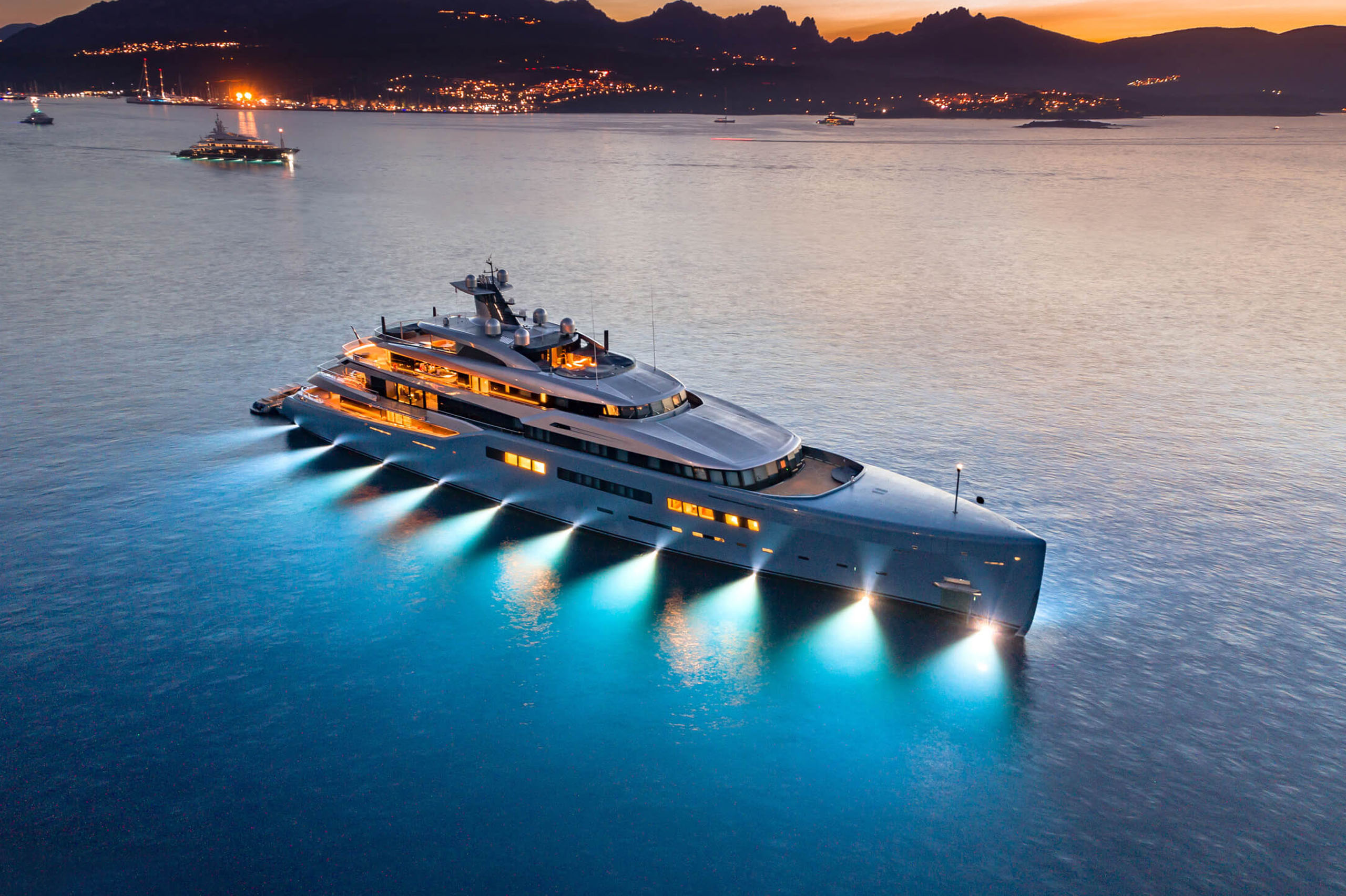
The 31 year history of Underwater Lights Limited
1991 was when I started designing the underwater light, computers and drawing software were too expensive for me so pencils and drawing board were the tools to begin with. Fortunately my employment as a marine engineer and later as a surveyor for Lloyds Register of Shipping (LRS) gave me the knowledge of materials, naval architecture, thermo-dynamics and electrical/ optical designs.
Luck was on my side as General Electric had started manufacturing single ended metal halide lamps which were far more efficient than the halogen lamps of the time and they had an output of around 12,000 lumens. Porcelain lamp holders and high temperature/ voltage silicone cable were available. Everything you needed to make a light. After a few days the design was completed and an application was made to LRS to approve the lights for installation into the 50m yacht (M.Y. Lady Marina). Sometime later M.Y. Lady Marina switched on her four underwater lights whilst she was at anchor in the Bay of Palma and after that every yacht wanted underwater lights.
Our next order was for 32 lights on a 100m yacht being built in Germany. The lights would be installed around the yacht. This required the addition of two new welds to compensate for the hull angle. The design and installation layout was approved by LRS. On reflection the 50m had her four lights on the stern and the next yacht had thirty two lights all the way round. There seemed no end to what one could do providing the system was safe and ‘Fit for Purpose’.
The first underwater light was called the BULLEYT and used a 150 watt metal halide lamp. Minor changes were
made to improve thermal and light output efficiency. In 2005 we started to test a 250 watt metal halide lamp
in the BULLEYT and found that the extra power and lumen output (19,000) did not work and deteriorated the overall efficiency. Basically the diameter of the glass lens (62.5mm) was too small and too much heat was generated. We increased the lens diameter to 75mm. and the insert diameter from 100mm to 120mm. These increases in size had to be made to our screwed version which are installed in composite hulls. These lights were known as the UL Ti MATE range.
Having cracked how to use the metal halide lamp along came the LED with new underwater light companies entering the market. We started testing LEDs around 2004 and the first thing we noticed was the economic truth in the LED specifications. We took our time in coming to the market with an LED underwater light to ensure that all our R&D which had taken place produced a bright and reliable LED unit – the ‘QT Range’ which then followed on with our latest design of underwater lights – the ‘QTS’ range.
The new QTS range has taken over 30 years of experience to develop and is arguably the most versatile and complete underwater light ever made for the marine industry. Designed in the simplest format possible to now accommodate a variety of light power outputs, Colour Options and Input Powers. Suitable for any boat from 20 meters up to the largest superyachts.
The through hull QTS 100 is uniquely made from Titanium and can be used directly on metal hulls, subject to surveyor approval, as well as on composite/fiberglass hulls saving yards and installers hours/days on installation and potential warranty concerns through galvanic corrosion.
The QTS 75 weldin/cofferdam is machined from 316L stainless steel or 5083 aluminium which is Lloyds 3.2 certificated.
Fitted with a toughened flat lens the beam angle is an ultra-wide 140 degrees perfect for running down the side of a yacht as well as along the stern. Available in low and high powers up to 25,000 lumens in blue, white, dual colour and colour change.
The key to developing new products is to ensure that the older generation of Bulleyt and ULTiMATE can be upgraded with ease. The aim is to always keep the same threads and internal sizes to allow customers to upgrade units without hauling the boat.
We also understand that some of our first boats, which still have the metal halide units installed, don’t want to upgrade to LED ‘as they still work’. We can still service these units with Original parts such as o-rings, gaskets, lamp holders etc to keep them going until the ballast or lamps no longer exist 30 years on.
At Underwater Lights Limited, we are busier than ever retrofitting all our previous bulb projects with LED simply by replacing the internals and electrics in an easy plug-and-play exercise. This leads me to mention the importance of the classification societies and MCA. The detail required for class type approval has significantly increased. Structural drawings, electrical and mechanical test reports, workshop approval, and installation information are just some of the onerous benchmarks now required. Attending class surveyors always have the final say when it is a ‘Classed’ vessel, however, the flag of registration and their surveyors can have a say in all matters of construction and safety aspects and decide what is fit for purpose.
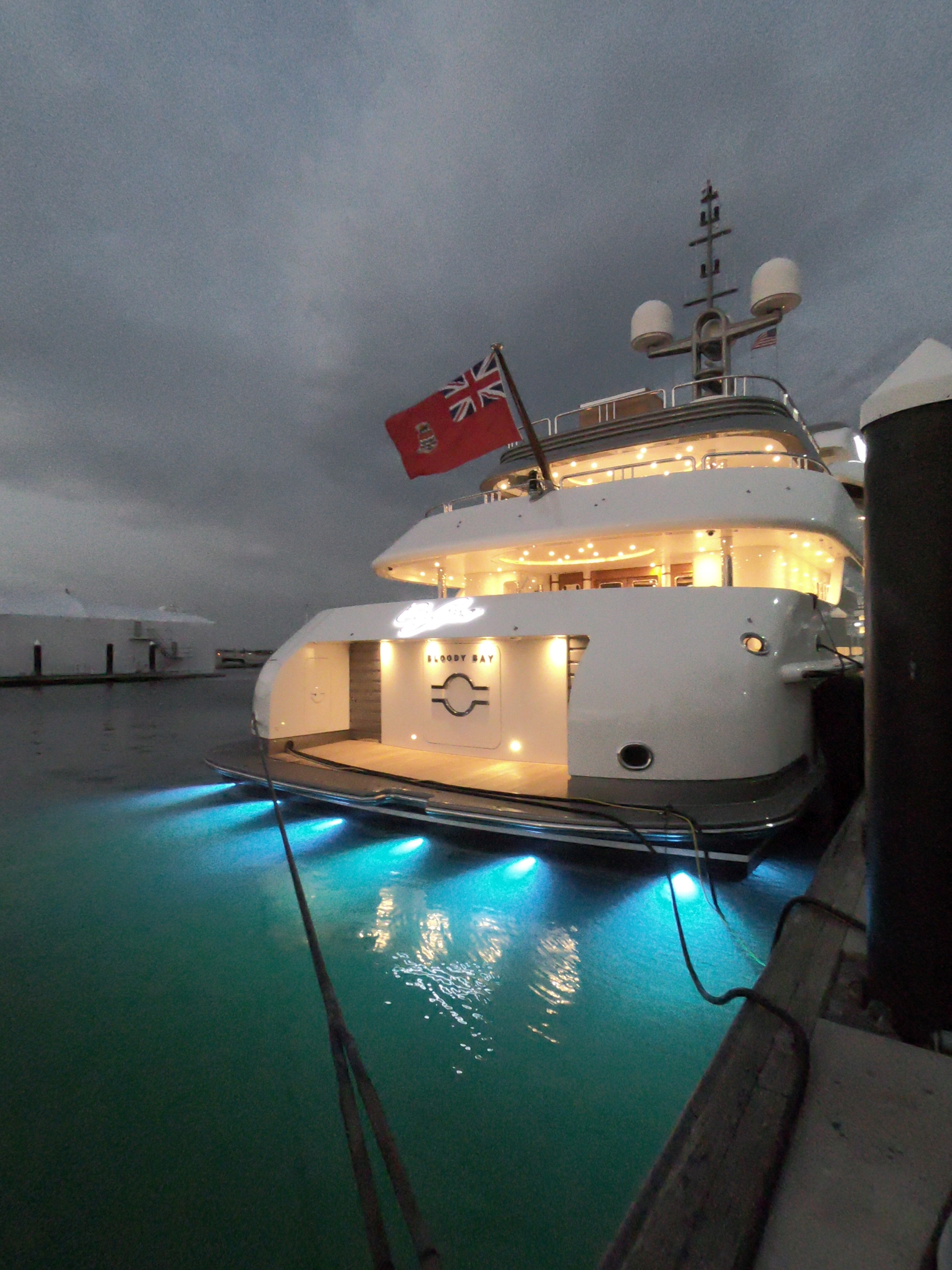
Let there be light
Still captained by its founder Peter Urquhart, the company has always striven to lead this competitive industry with innovative products, created through meticulous R&D. Urquhart explains the journey so far, “When I designed and built a light for my first customer back in 1991, I had no idea that marine lighting was going to become my life. Throughout the past 29 years we have managed to keep the same ethos we started with, by building exciting R&D lead products and supplying a personal service to our customers – that is why I believe we are trusted by the world’s leading shipyards.”
Underwater lighting has over the past 10 years become a must have item on boats and yachts of all sizes. There are a plethora of companies offering vast product ranges to accommodate all hull types, boat styles and purposes from night time fishing to just looking good at the dock. However, they believe the market has become saturated with simply too many options and owners and captains are often left baffled by the choices.
Finance Director, Klare Urquhart says, “We’ve always kept our product range limited and it’s a welcome relief for new customers that there is not this steep learning curve to understand our product names and hierarchy and how they compare to what is out there.”
This year though, they launched the QTS100 thru hull model, which arguably is the last underwater light you’ll ever need and has the potential to supersede their entire lineup. The new QTS100 model, represents 30 years of experience and is the most versatile and complete underwater light ever made for the marine industry in the simplest format possible.
One generic housing now accommodates every option by simply swapping out inserts.
Each insert gives a variety of options:
- Light power outputs from 10,000 lumens up to a massive 25,000
- Color options – white, blue, dual color and full color change
- Input powers from 12/24vDC to 110/240vAC
This makes the thru hull QTS model suitable for any pleasure boat from 40’ up to the largest 300’+ superyacht.
Made from titanium, instead of the traditional naval bronze or stainless steel, the light can now be used directly on metal hulls (subject to Surveyor Approval) as well as composite/fibreglass hulls saving yards and installers hours/days on installation.
This also alleviates a number of potential warranty concerns around dissimilar metals through galvanic corrosion.
Fitted with a highly toughened, flat lens the beam angle is an ultra wide 130 degrees which is perfect for running down the side of a yacht as well as across the stern.
The next few months will also see the launch of the QTS-75 weldin which packs an incredible 25,000 lumens punch, making it the smallest and brightest LED underwater light on the market. This light will feature an adjustable beam angle.
All the old models of our underwater lights including the small and large screwed Bulleyts, UL Ti MATE 75’s and 80’s can be retrofitted to LED. Our main aim is to always keep the same threads and internal sizes for as many years as possible to allow customers to upgrade units without having to haul the boat.
Urquhart concluded, “Twenty- years on, all those original lights I made for that first superyacht, still work every single day by the way!”
Naturally the entire range is Lloyds Type approved and benefits from 30 years in the field design and real world testing, indeed the very first lights fitted back in 1991 are still in operation to this day, a true testament of solid design and engineering.
Everything has led to this being the most comprehensive underwater light for the market at a price point that sets the new standard for the industry. Underwater Lights Limited continued to machine and produce underwater lights all the way through Covid 19 to supply yards all over the world.

New Petite-sized underwater light packs a punch
Making its debut at the prestigious Fort Lauderdale International Boat Show this November, the QTS-100 is small in size with a low enough profile to allow it to be flush-mounted in nearly any location on the hull or transom.
The QTS-100 is available in 3 formats and is designed with a hole cut-out of 74mm making upgrading to LED technology easy and without costly hull repairs. It’s proven AB2 housing construction has been a solid performer for 27 years throughout the Underwater Lights Limited product range.
The QTS-100 Internal is the DC model which has a lumen output of 10,000 and is recommended for composite boats up to 30m/100ft. You can space each fixture between 1-5 meters/3-9 ft apart for the best even illumination as it has a standard 140 degree beam angle providing a wide-spreading light pattern preventing dark spots between fixtures. It is controlled by a standard on/off switch with a 11-28V DC power range and is available in a single color white and blue or the new dual color white/blue option.
The QTS-100 External is The AC version (110-240vac) and has an external driver which provides the brightest light output of 20,000 lumens. Suitable for vessels over 20 meters/65 feet with the same 140 degree beam angle. It is controlled by a standard on/off switch and is available in white and blue.
The QTS-100 RGBW is the full color change model available in both DC or AC. Powered via an external driver which is controlled via a DMX controller (sold separately).
QTS-100 joins an impressive line-up of underwater marine lighting products from Underwater Lights Limited including retro-fit models meaning any vessel already equipped with underwater lighting can be easily upgraded to the latest LED technology without hauling.
The complete QTS-100 range has been Lloyds certified for test and design pressures to 100 and 25 bar.
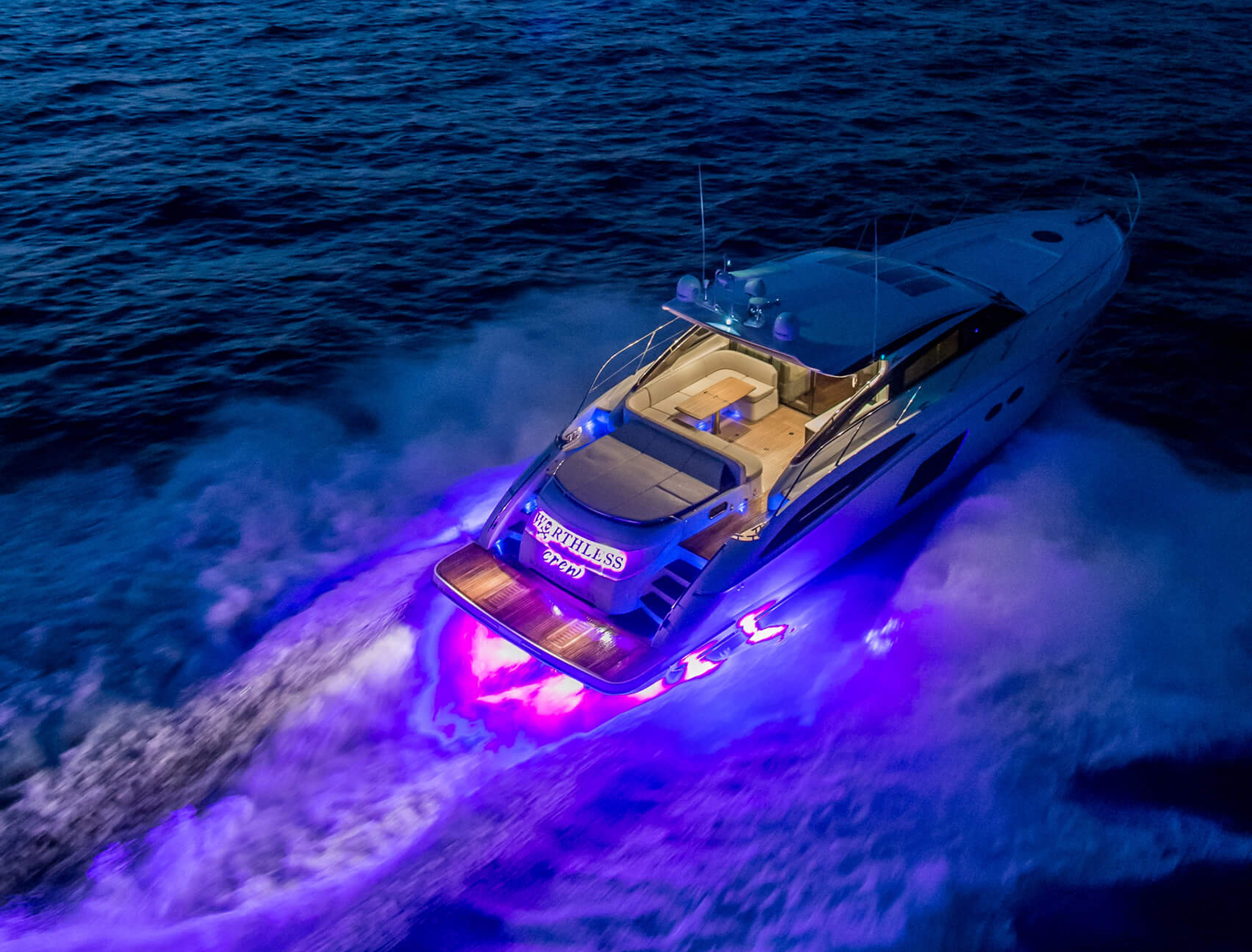
Brilliant Ideas from Underwater Lights
Underwater Lights Limited announce new products combined with advanced techniques for ‘retro’ installation, giving shipbuilders and boat owners yet more opportunities to illuminate their vessels. Over the winter a 100 and 160 metre Superyachts have been upgraded to the high powered Retro underwater lights without hauling the boats from the water.
Watch this short video to see how your boat can be transformed.

Light up the Ocean with QTLED75
Chosen for their illumination, ease of installation and modular design, the LED light range from the renowned British company continues to be used worldwide by large shipyards and individual customers alike in both new commissions and refits.
With ultra high levels of luminosity, 9600 lumens, these LED lights have an incredibly long lifespan of 40,000 hrs, both all important criteria in this environment. The unique lens collects and focuses the light from the LED chip into a crisp 87 degree light beam that makes the QT LED 75 stand out from our competitors. The same LED is fitted to the QT LED 130 for installation into composite (G.R.P and Carbon Fibre) hulls.